Glensound GSL9 Audio Mixer
The Regional bunker-based studios of the WTBS required facilities that were robust, reliable, and simple to operate. The Glensound GSL 9 Mixer, a standard for BBC small studios, was the preferred choice.
Local Radio News Preparation
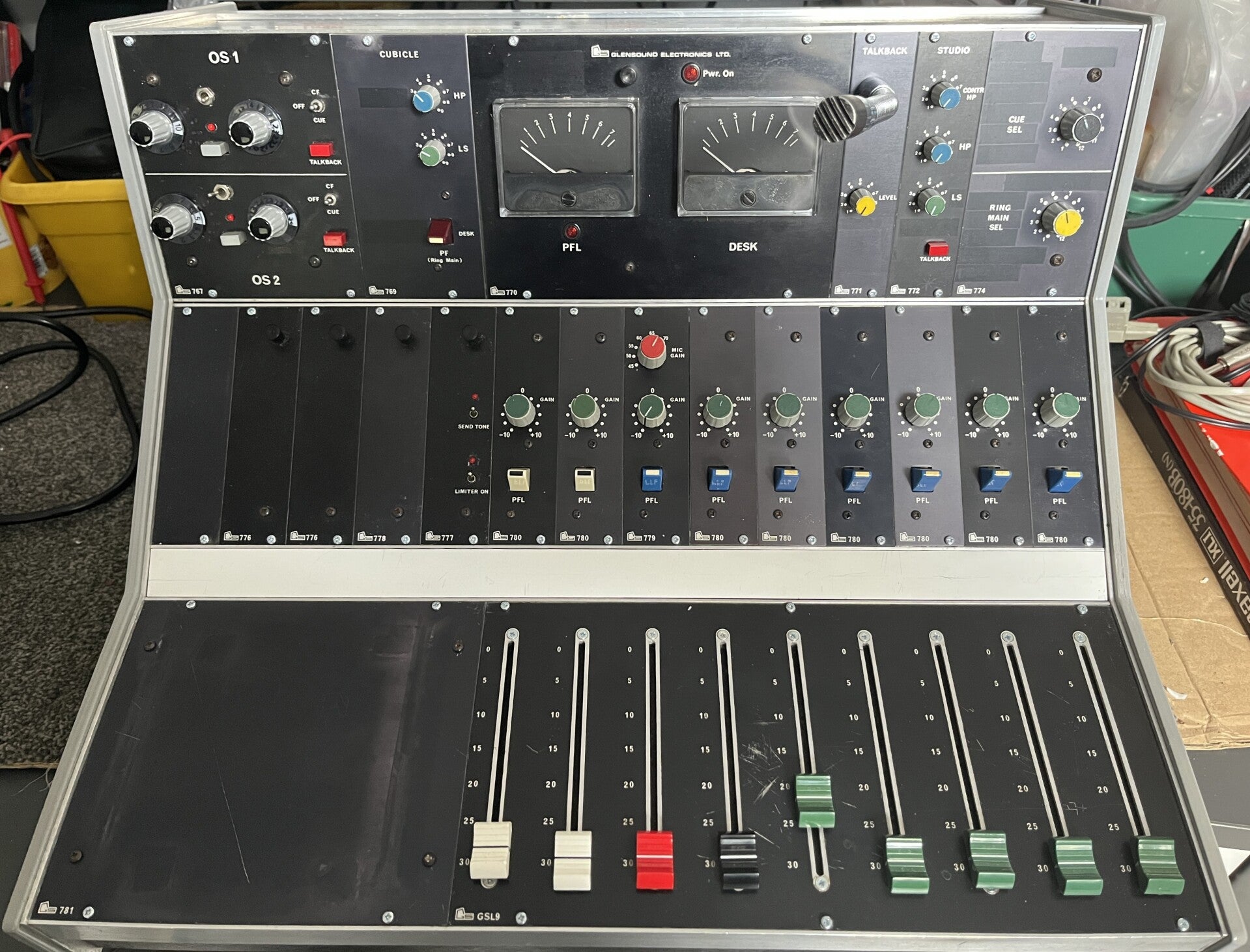
In the late 1970s to mid 1980s the Glensound GSL 9 mixer was used in BBC local radio NPA (News Preparation Area) studios. This was a studio next to the newsroom to enable the staff there to pre-record interviews and read the news bulletins.
Called the "9" as it had nine Penny & Giles* faders. There was a GSL 8 too - guess why it was called that!
In either configuration, it was a simple mono audio analogue mixer with separate outputs to feed reel-to-reel recorders and the studio output amplifiers.
Although simple, it was very robust, being built with a metal extrusion frame. Entirely modular it could be configured to suit specific roles in the broadcast facility.
Like bigger studio mixing desks it was equipped with two PPM (Peak Programme Meters) to ensure accurate reading of audio levels by the operator.
* Penny & Giles are a US based manufacter of conductive plastic. This is used in the faders to ensure a smooth glide and thus level control of the fader. Of note is that Penny & Giles also manufacture "Black Box" (actually coloured orange) aircraft flight data recorders.
Mix And Match
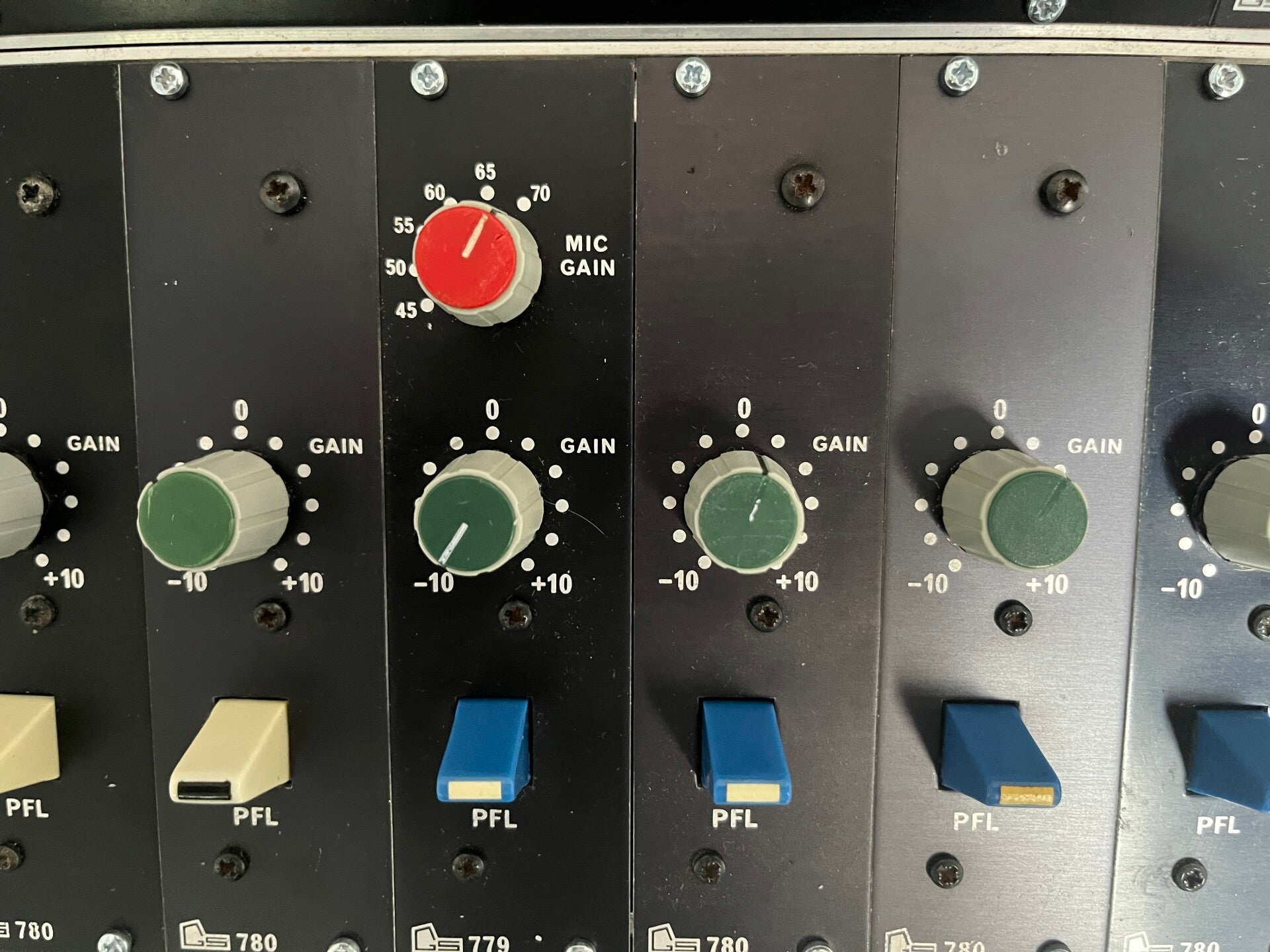
The amplifier modules in the middle section could be changed in functionality. E.g. to add more microphone (the module with the red rotary knob) or line level channels to connect equipment such as tape recorders.
The red-knobbed control input "course gain" (volume) into the channel as microphones output such a small signal they required large amplification. The green-knobbed gain controls offered +/- 10 dB of level control and were used to match the levels of all the audio souces on the faders to enusre, when the faders were opened to the same position (usually fully open) all the sources were at the same volume.
The blue/white PFL (Pre Fade Level) swiches are used to "audition", or pre-hear, the audio source on that fader before it is opened. This is useful to ensure the audio source is present and also, in conjunction with the green-knobbed gain control and the left-hand PFL PPM meter, to set the volume to the correct level.
They look simple, but they aren't
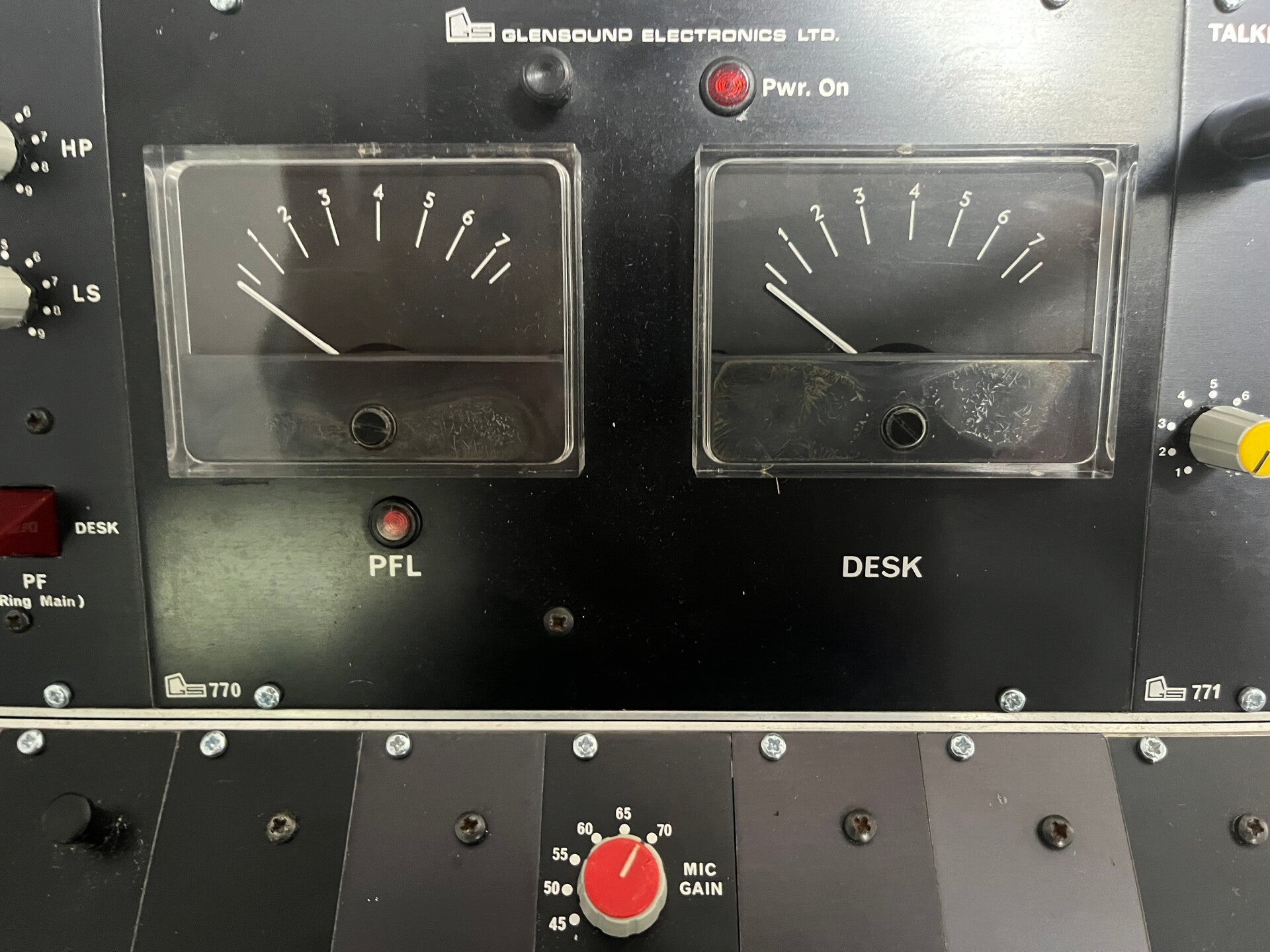
The two black meters with simple 1 - 7 legends are BBC designed Peak Programme Meters (PPM) made by the Ernest Turner Company.
The left hand one, marked PFL (Pre Fade Level) is used to audition the audio signal on a channel before the fader is opened using the PFL key on that channel to switch it through to the meter.
The right-hand meter, marked "DESK" is used to monitor the audio levels leaving the mixer and thus the studio.
In use the white needle would ideally peak (reach) no more than the number 6 (or "PPM 6" in broadcast audio engineering parlance) this, for the technically minded equated to +8dBu.
Each division between each number was equal to 4dBu of level. Thus PPM 4 equated to 0dBu, PPM 3 is -4dBu.
Norfolk And Good
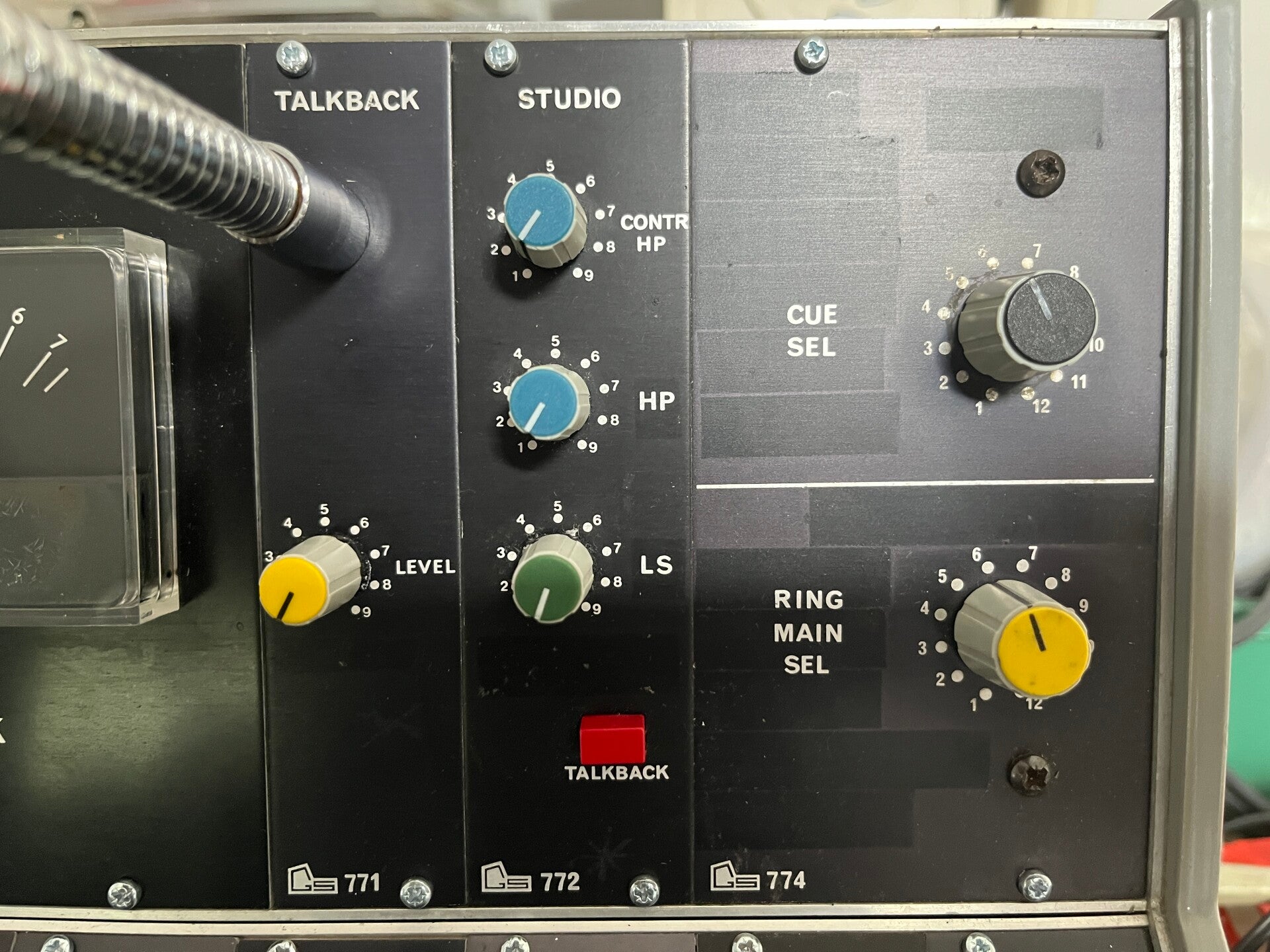
This particular Glensound GSL 9 was used in the NPA studio at BBC Radio Norfolk in Norwich until it was de-commissioned when the station was refitted with digital technology.
These desks were always hard worked and, despite the engineer's attention, little loved by the newsroom staff. In essence, they were just a tool for them to do their job.
You can still see the marks left by the many labels that were stuck all over it to denote what switch position did what or allowed you to hear.
New, in period keeping, labels will be added in time, applicable to it's WTBS RSG/SRHQ bunker studio application.

"We never left the T.O.M.'s office unmanned during an exercise, just in case someone tried to ‘borrow’ the pistol!"
A Jones - BBC staff member