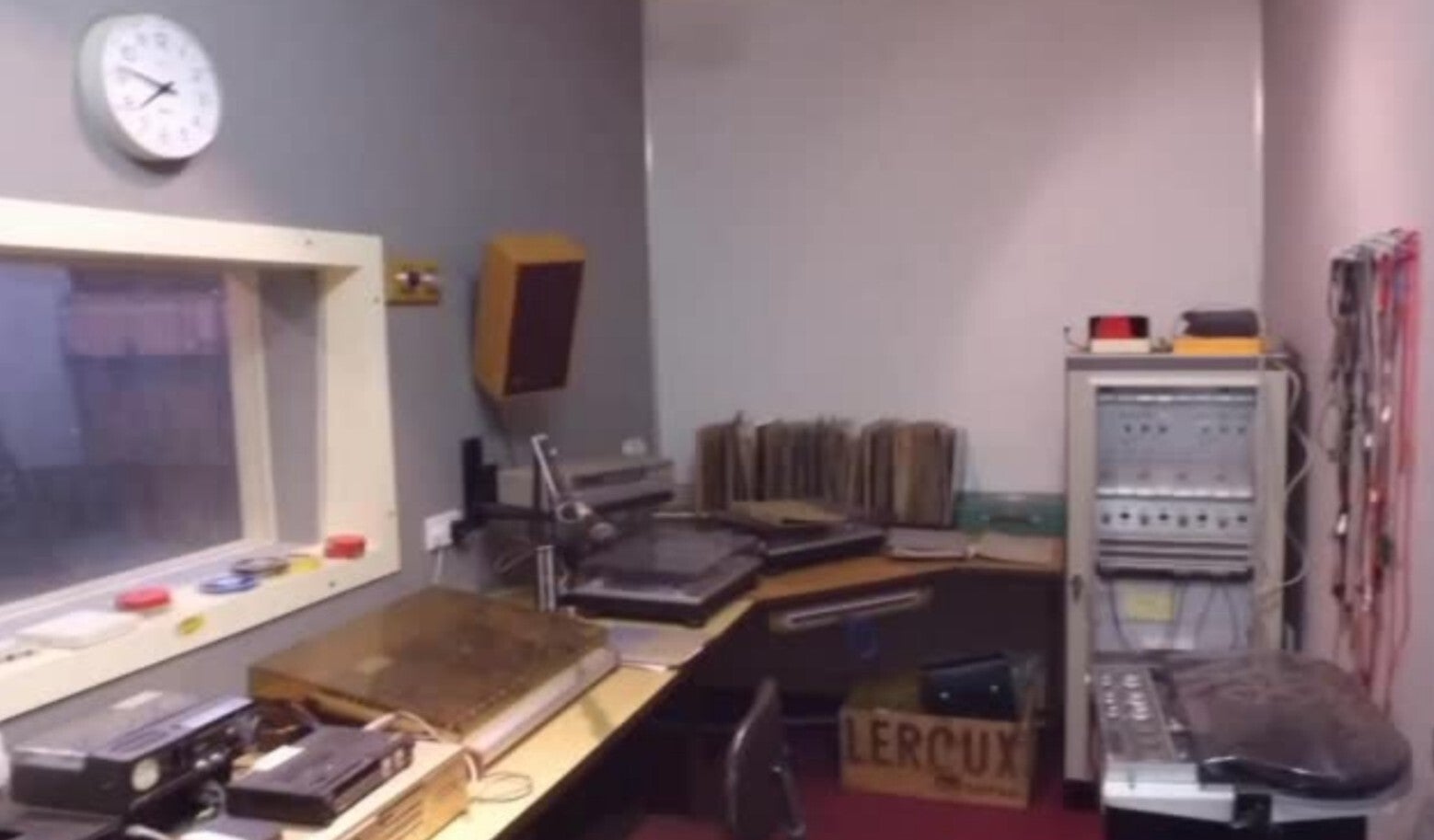
The Original Studios
Over the life of the WTBS the studio layout and equipment installed in the regional bunkers varied considerably, as refits, space or bunker moves dictated a new installation. In at least one instance, equipment that had first seen service with the BBC in 1938 was still in use forty years later!
Simple but Effective
The equipment in the regional bunkers was not deemed as cast off, or of a lesser quality, than the equipment the BBC used in its permanent studios at Broadcasting House or Television Centre.
But simplicity in both its operation and what it could and would broadcast was the key.
Although in the early days of the WTBS there were facilities to play music from records, by the late 1960s the ethos of the service was to broadcast short annoucements and bulletins, either live or from tape, at specific times.
No deep, round-table discussions, for example on the moral position of nuclear conflict and its survival, were envisaged!
Thus the equipment provision reflected that.


The Final Version
The studios in the Cultybraggan and Ballymena bunkers were examples of the last version of the WTBS studio.
As built the studio equipment consisted of:
• an Audix Broadcast MTX 500 mixer modified with a mono output
• a Uher 4000 Report Monitor portable reel-to-reel tape recorder
• a Technics cassette recorder
• an AKG D202 microphone on an angle poise arm
• Sennheiser HD414 headphones
• An LS 1/8 powered speaker mounted on the wall with a swivel mount bracket
• A red “mic live” light from Canford Audio
Still Going Strong
In 1979 the Channel Islands commercial broadcaster, Channel Television, was invited to visit the Jersey bunker during a weekend exercise.
The images shown of the WTBS studio there indicate it was equipped with BBC in-house designed technology dating from before World War 2!
The operator in the cubicle (control room) is seen using an OBA/8 microphone amplifier and a passive, i.e. it had no electronic amplification, MX/18 mixer. This was first used by the BBC in 1938!
The reporter for Channel Television was Robert Hall, who later worked for the BBC. He revisited the bunker in 2018 and in his report it was clear the studio had been refitted to the final reiteration (above) of a WTBS studio.


"Be Prepared"
The BBC had a studio in the huge Central Government HQ bunker at Spring Quarry, Corsham in Wiltshire. It was allocated rooms 38, 57 and 59 in Area 16. Room 38 most likely the production office whilst rooms 57 and 58, being adjacent, was where the studio and control room (Cubicle in BBC parlance) was located.
There were known to be lines linking it to the HQ of the WTBS at Wood Norton, however by the mid-1960s the CGHQ bunker was considered unfit for purpose, meaning the studio equipment was eventually stripped out.
Based on research of other, similar period WTBS studios, it probably used the same, or similar, equipment to the Jersey studio.
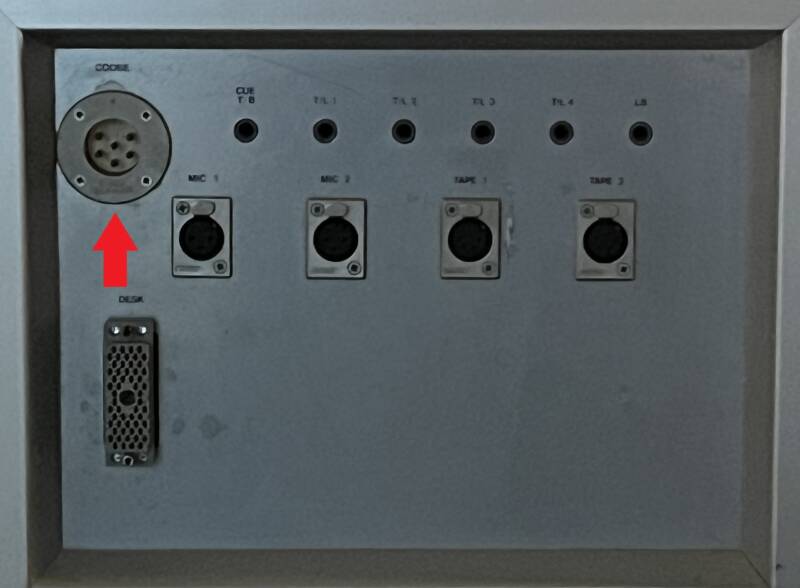
CoOBE Point
All studios were fitted with a wall mounted CoOBE (Commentator Operated Broadcasting Equipment) socket to allow the connection of the unit to the studio output lines equipment. It could act as a fall back method to get a signal to the transmitter if the studio equipment failed.
You can read more about the CoOBE unit itself in the technical equipment section.


Stopping the DJ
If all else failed and the transmitter lost its communication link with its regional bunker studio or Wood Norton, some PA (Protected Accomodation) transmitter sites were installed with broadcast equipment that ranged from a full studio setup to a very simple amplifier and microphone to connect directly to the input of the transmitter to facilitate announcements from the site itself.
Further transmitter sites were designated as UKWMO "Air Raid Warning Chain Transmitters" and were equipped with cassette decks to enable the playing of the air raid announcement and a microphone for live broadcasts.
As a BBC transmission engineer wryly remembers: “The microphone was kept locked in a cupboard, to stop anyone doing some illicit DJing I suppose.”
"...no DF projects were listed and the engineers would still not be able to talk in detail about their work in this area I suspect, having signed the Official Secrets Act...even if most of the information is now in the public domain.
C C - BBC staff engineer